

Environmental challenges rarely exist in isolation, as do the conversations required to understand them. That understanding was on full display at “Beneath the Surface: The Environmental Stories Shaping Our Community,” a public panel hosted this month by Suncoast Searchlight in partnership with the Science and Environment Council.
Part of Suncoast Searchlight’s ongoing community engagement series, supported by Gulf Coast Community Foundation (Gulf Coast), the panel set out to bring clarity to environmental issues that are often misunderstood or poorly contextualized when viewed in isolation. Together, four local experts examined how water, land, wildlife, growth, and policy are interconnected — and why understanding those relationships is essential to the future of our region.
A Conversation Rooted in Place
The panel convened local leaders focused on the region’s environmental health and future, including Randy Wells, Director of the Dolphin Research Program; Abbey Tyrna, Executive Director of Suncoast Waterkeeper; Jennifer Shafer, Co–Executive Director of the Science and Environment Council; and Jon Thaxton, Gulf Coast’s Director of Policy and Advocacy and a longtime environmental advocate.
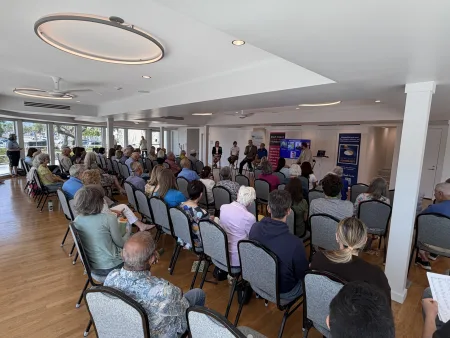
Moderated by Suncoast Searchlight reporter Derek Gilliam, the panel opened with a guided conversation among the speakers before transitioning to a Q&A with the audience. Dozens of engaged community members took part, asking thoughtful questions and sharing perspectives that reinforced the value of informed, public dialogue around the region’s shared environmental priorities.
Thinking Beyond Silos
As participants leaned in, the conversation moved deliberately beyond singular data points or siloed solutions. Panelists examined how environmental systems — from water quality and supply to wildlife health and land development — overlap, how change accumulates over time, and how access to clear, trustworthy information equips the public to engage meaningfully with complex environmental challenges.
A central theme of the discussion was the need to stop treating environmental issues as standalone problems. “We are not thinking systems-wide. We’re thinking of systems in isolation,” emphasized Thaxton.
That systems perspective surfaced throughout the panel, with speakers drawing connections across a range of environmental challenges. The conversation linked topics such as drought related water restrictions and emerging research on microplastics in dolphins in Sarasota Bay and surrounding waters. Wells described how dolphins can serve as a model for tracking how pollutants move through ecosystems and into people, while Tyrna addressed misconceptions about water scarcity amid severe drought and declining levels in our local water table.
Turning Information into Action
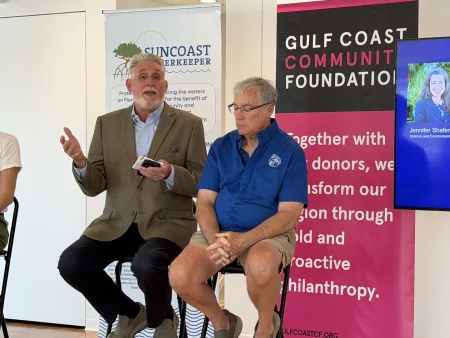
Thaxton also pointed to collaborative work already underway, including the Water Quality Playbook, co-authored with Jennifer and David Shafer of the Science and Environment Council. The Playbook brings together research, best practices, and actionable strategies designed to help communities and decision-makers improve water quality outcomes across the region.
He also discussed Gulf Coast’s engagement in supporting the renewal of the Environmentally Sensitive Lands referendum, which will appear on the November 2026 general election ballot. The voter-approved program has helped protect critical natural lands and water resources and, if renewed, would allow the county to continue investing in conservation that supports the region’s environment, economy, and quality of life.
“The stopwatch has clicked and the countdown has started,” Thaxton shared, noting that this referendum is the region’s opportunity to purchase and responsibly preserve the last remaining open land parcels in Sarasota County. “If we do not have the resources to... purchase these properties, we will not get another chance, nor will your children.”
Strengthening Environmental Journalism
Panelists also addressed the role of journalism in supporting informed communities. Initiatives such as EcoBeat, developed by the Science and Environment Council and funded in part by Gulf Coast, are helping reporters access experts, data, and story ideas that provide critical context and continuity in environmental coverage.
As Shafer put it, “Everything is connected. Everything is cumulative. There isn’t a story out there that doesn’t have an environmental angle and we want to see that reflected in the news.”
That belief aligns closely with Gulf Coast’s partnership with Suncoast Searchlight, where supporting accountable, reliable local journalism helps ensure a more transparent flow of information for the public. “We have to be able to tell our stories,” Thaxton urged. “...If you can tell a story about how preserving the natural environment increases and preserves the health of [our] children, if you can tell them that these spaces provide their kids and their grandparents with this opportunity to get into a place where [cell phones] are not necessary... I think that’s the most effective way to [share] environmental and conservation causes.”
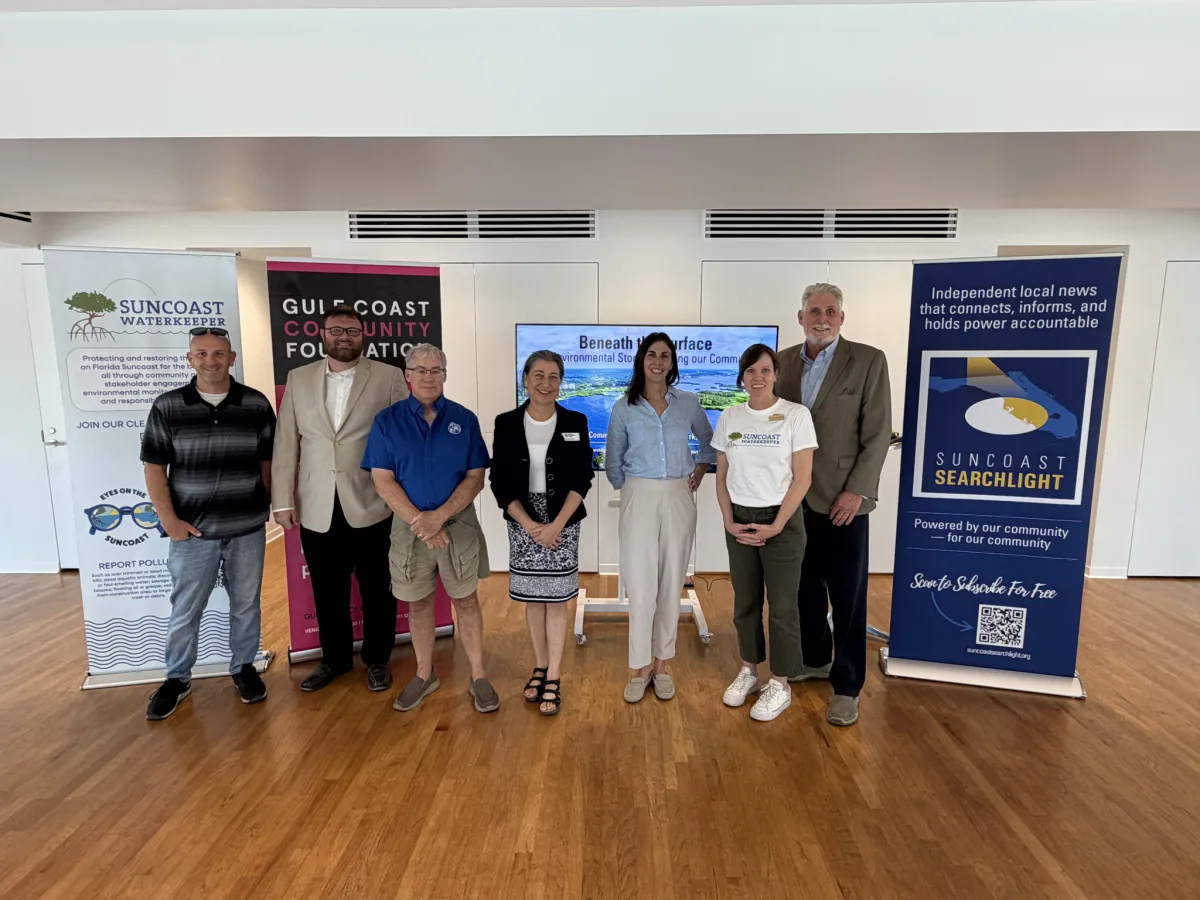
Sharing environmental information clearly and consistently helps residents understand how decisions made today shape daily life for the region of tomorrow. Ensuring that information is both factual and accessible is essential to building the shared understanding needed to protect the systems our community depends on.
Back to all articles

